
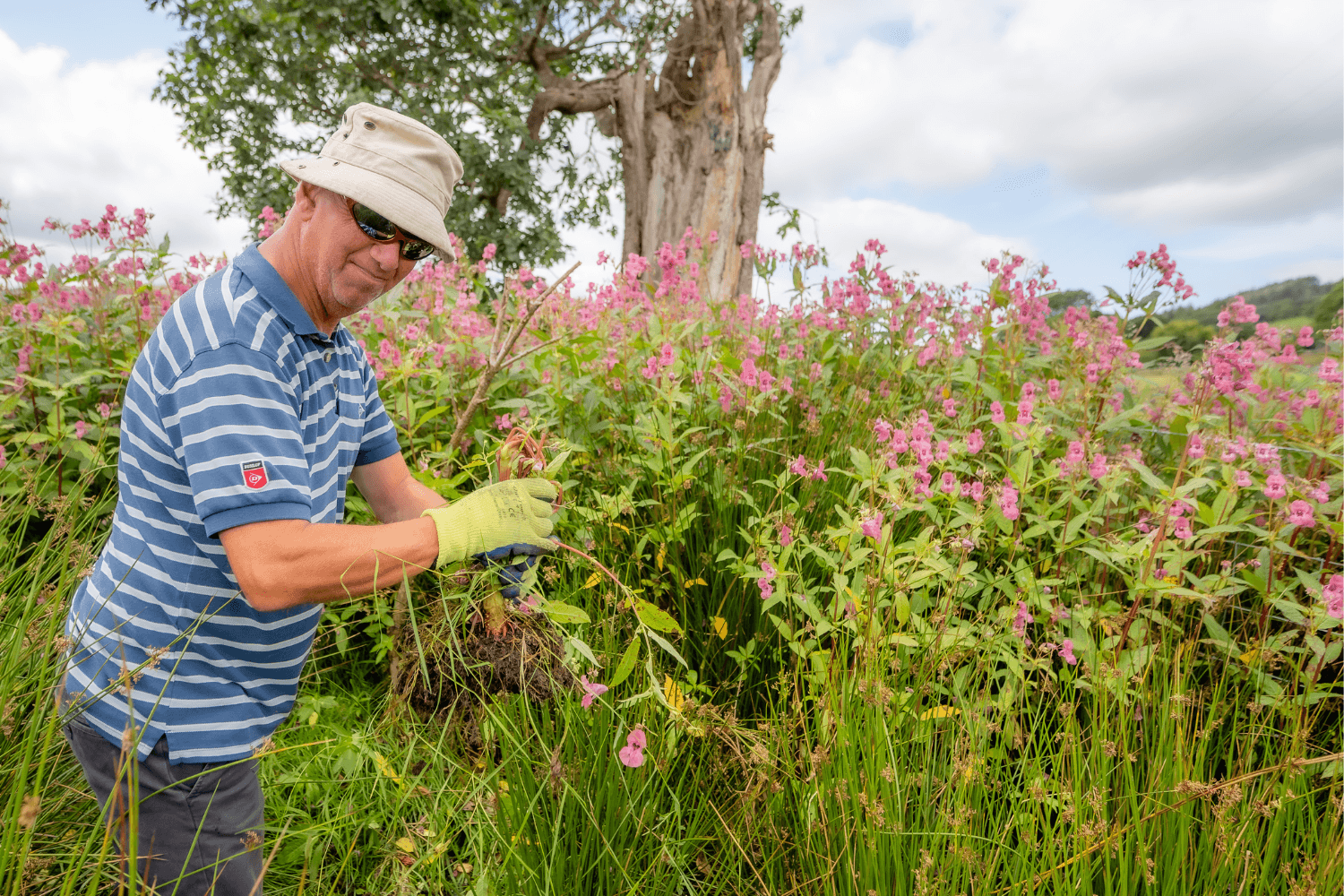
A volunteer bashing invasive Himalayan Balsam
Local people are being urged to roll up their sleeves and take the lead in tackling one of the UK’s most widespread invasive non-native plants, Himalayan balsam, as part of a long-term, catchment-wide effort to reduce and ultimately eradicate the species across the West Cumbria catchment.
West Cumbria Rivers Trust is calling on volunteers, community groups and local champions to form their own ‘balsam bashing’ teams ahead of the upcoming growing season. The aim is to build a coordinated, strategic approach that tackles the plant at source and works progressively through river systems.
Rather than isolated efforts in individual locations, the Trust is encouraging groups to take a catchment-based approach: starting upstream where balsam first establishes and then working downstream. This ensures that treated areas are not continually reinvaded from higher up the watercourse, making long-term control far more effective and efficient. The Trust explains, this approach is a bit like “sweeping the stairs”, tackling the source first and then moving step by step through the system to achieve lasting results over time.
Himalayan balsam is an invasive non-native species (INNS) that spreads rapidly along riverbanks and wetlands. It outcompetes native plants, reducing biodiversity and leaving riverbanks bare in winter when it dies back. This increases the risk of soil erosion, which can harm water quality and damage vital habitats for fish and other wildlife.
While the scale of the challenge is significant, the Trust believes a community-led, well-planned approach is key to long-term success.
Izzie Mullin, WCRT’s Invasive Species Project Officer, said:
“We have a huge ambition to tackle Himalayan balsam across West Cumbria. It’s a monumental task, but one we are determined to achieve. It’s impossible to do this alone. Local communities are at the heart of this effort, and by supporting people to take action in a coordinated way, starting upstream and working downstream, we can make real, lasting change for our rivers and wildlife. This strategic approach means effort is focused where it will have the greatest long-term impact, rather than repeatedly returning to sites that are being reinfested from above.”
To support new and existing groups, the Trust is offering:
Training sessions for volunteers
A practical booklet to help people run their own balsam bashing events
Guidance on securing landowner permissions
Support to identify local Himalayan balsam hotspots and source areas
Balsam bashing is a simple, hands-on conservation activity that involves pulling up the shallow-rooted plants before they set seed. It is an effective and rewarding way for people of all ages to get involved in protecting their local environment.
Community groups, friends, families and individuals are all encouraged to take part, whether by joining an existing effort or starting something new in their area.
More information on how to get involved, including resources and support, can be found at https://www.westcumbriariverstrust.org/projects/local-balsam-groups or by contacting Izzie or Ruthie at info@westcumbriariverstrust.org or 017687 75429.
Together, with the help of local communities, the vision of balsam-free rivers in West Cumbria can become a reality.