
Removing barriers and restoring flows - three river restoration projects from this summer
At West Cumbria Rivers Trust, a big part of our work is giving local watercourses room to function naturally. While a lot of our restoration happens inside larger catchment-wide schemes, this summer we stepped out to tackle three standalone sites where removing barriers and opening up fish passage were top priority.
Every stretch of river comes with its own quirks and challenges. Here’s a look at how specialised technical knowledge, practical engineering, and good old-fashioned teamwork helped us restore natural flows across three very different sites in and around West Cumbria.
1. Glinger Burn: technical expertise at work
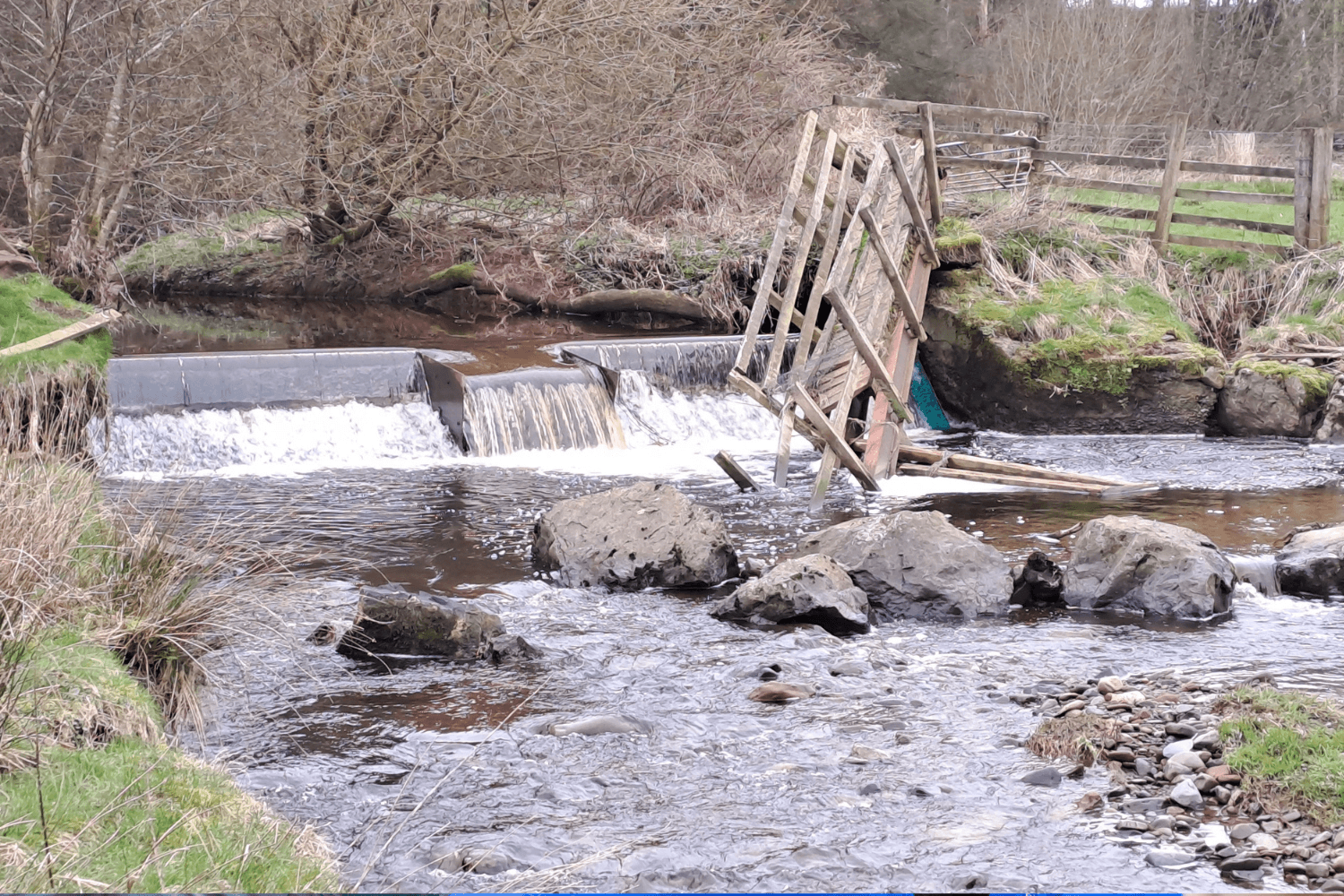
Glinger Burn before the works
Just north of Longtown, Glinger Burn had an old weir with a failing eel pass. The weir didn't serve a purpose anymore, but the sharp drop in height created a huge obstacle for migrating eels and other fish trying to move upstream.
Because of the specialised technical knowledge needed for barrier removal, the Environment Agency (EA) invited our team outside our usual catchment area to take the lead on a fix.
Rather than just sticking a new artificial pass on an old problem, we collaborated with the EA and design specialists at Dynamic Rivers to fix the root cause: the height drop itself. Working alongside local contractors Tom Lindsay, we took a bed-level approach. Starting downstream, the team introduced natural stone to build up the riverbed, smoothing out the drop completely.
Now, instead of a sudden drop, there is a gentle, continuous incline. Migratory fish can travel freely upstream, and the new stone has created fantastic new habitat for local aquatic life.
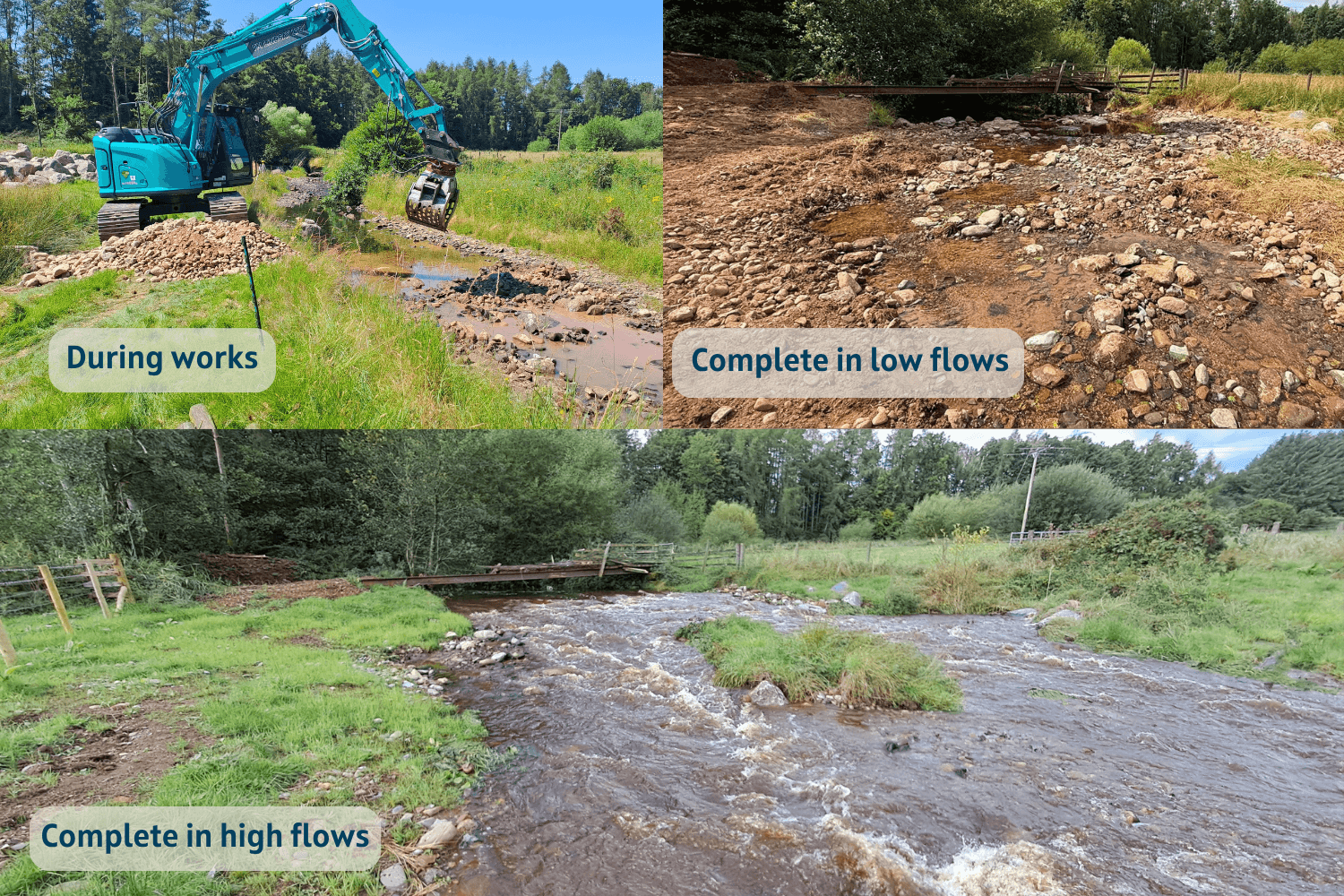
Glinger burn during and after works
2. Fleet Gutter: innovation on a budget
Fleet Gutter sits on a tributary of Crosdale Beck, which feeds into the River Ehen, just north of Ennerdale Bridge. Here, the issue was an old man-made concrete culvert running under the road.
Because the inside of the culvert was lined with smooth concrete and laid on a steep slope, water rushed through it far too fast. To make matters worse, there was a steep drop at the bottom end. For fish trying to swim up, it was practically impossible.
Ripping out and replacing a road culvert would have cost an eye-watering amount of money. So, we looked for a cost-effective solution that would work with the structure already there.
We installed concrete baffles along the bottom of the culvert to break up the flow and give fish resting spots on their way through. Then, immediately downstream, we built a stepped pool out of large boulders. This raised the water level at the entrance and gave fish a clear, stepped path from the natural riverbed up into the culvert.
By using a bit of clever engineering, we got fish moving again for a fraction of the cost of a full replacement, allowing them to access fresh habitat upstream.
This project was delivered thanks to the National Trust team, with funding provided by Admiral.
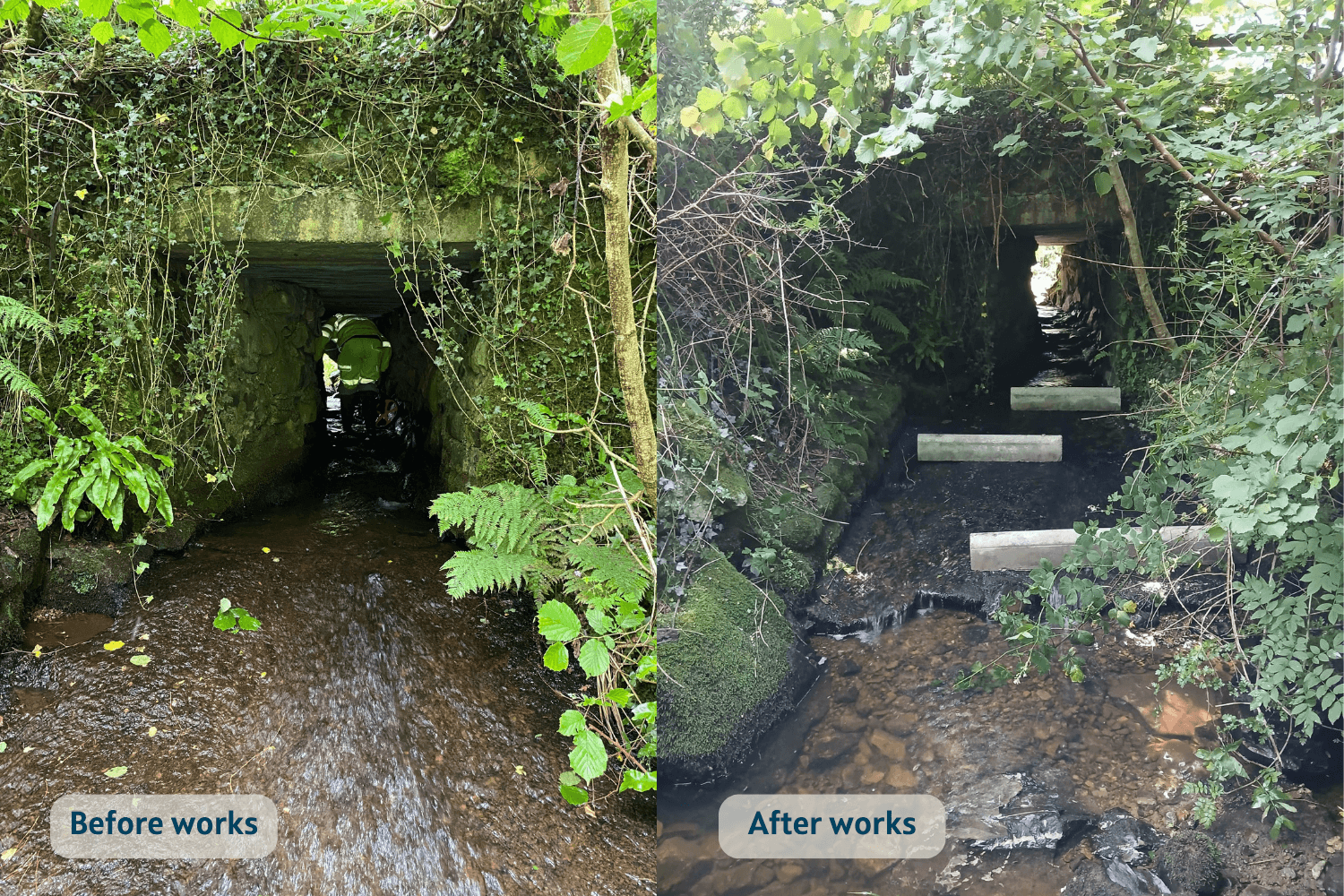
Camera angles don't do it justice: this culvert's steep slope created a torrent very difficult for fish to swim against
3. Ireby Bridge: opening up 4 km of the river Ellen
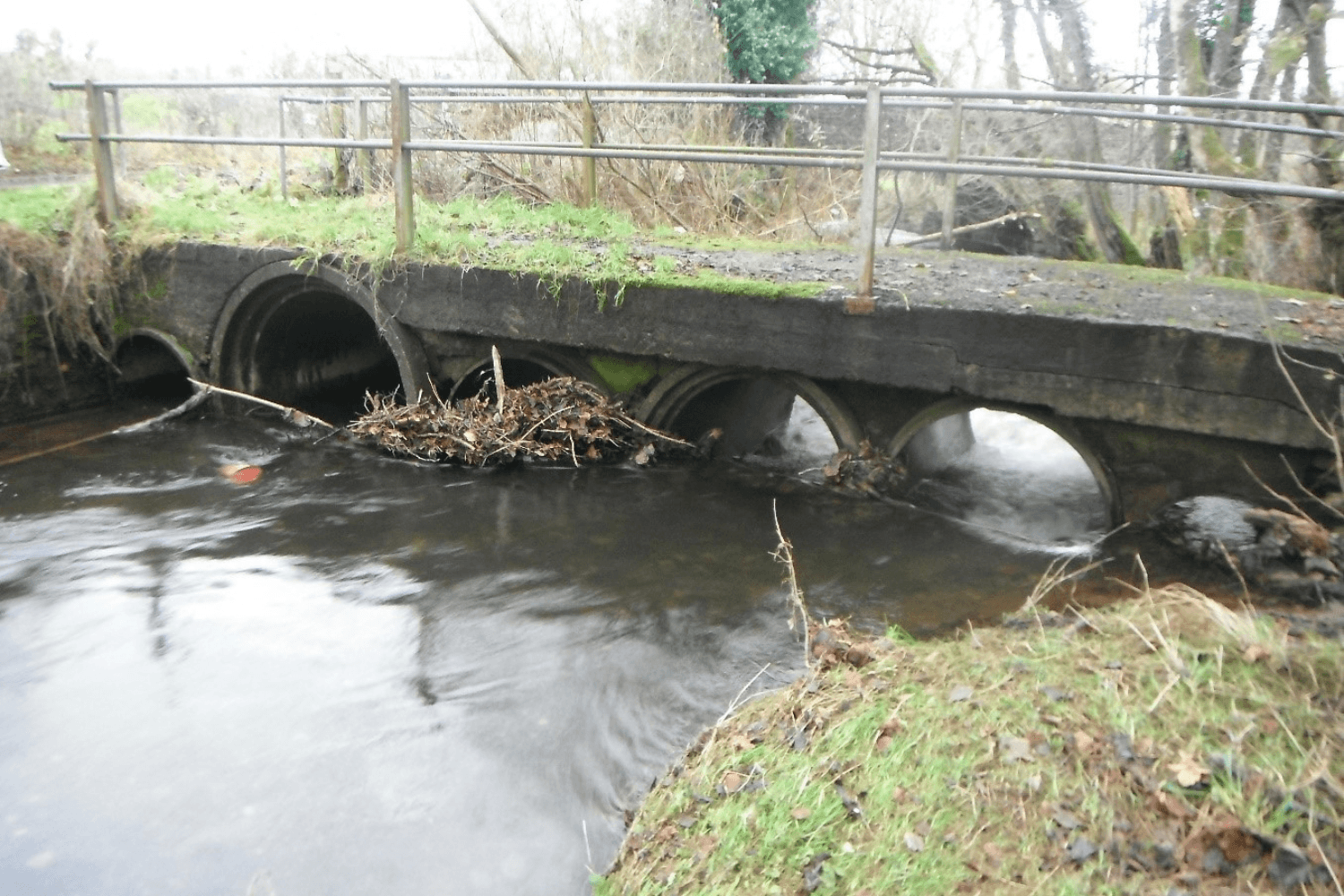
Ireby Bridge before works with blockages
Up at Ireby on the River Ellen, an outdated ‘piped bridge’ was causing constant headaches. Five narrow pipes laid side-by-side across the riverbed served as the base for a footbridge.
Unsurprisingly, it was a bottleneck. Fallen trees, gravel, and river debris regularly choked the pipes, completely blocking migrating fish, disrupting the natural movement of sediment, and increasing local flood risks during heavy rain.
Sometimes the only right answer is a clean slate. We pulled out the entire pipe system and installed a single-span pedestrian bridge in its place. Taking those pipes out instantly reconnected four kilometers of upstream habitat for fish and allowed the river to move gravel naturally again. As a bonus, the local community now has a much safer, far more attractive crossing to use.
This project came together thanks to the National Trust and the Environment Agency, with vital funding provided by Admiral.
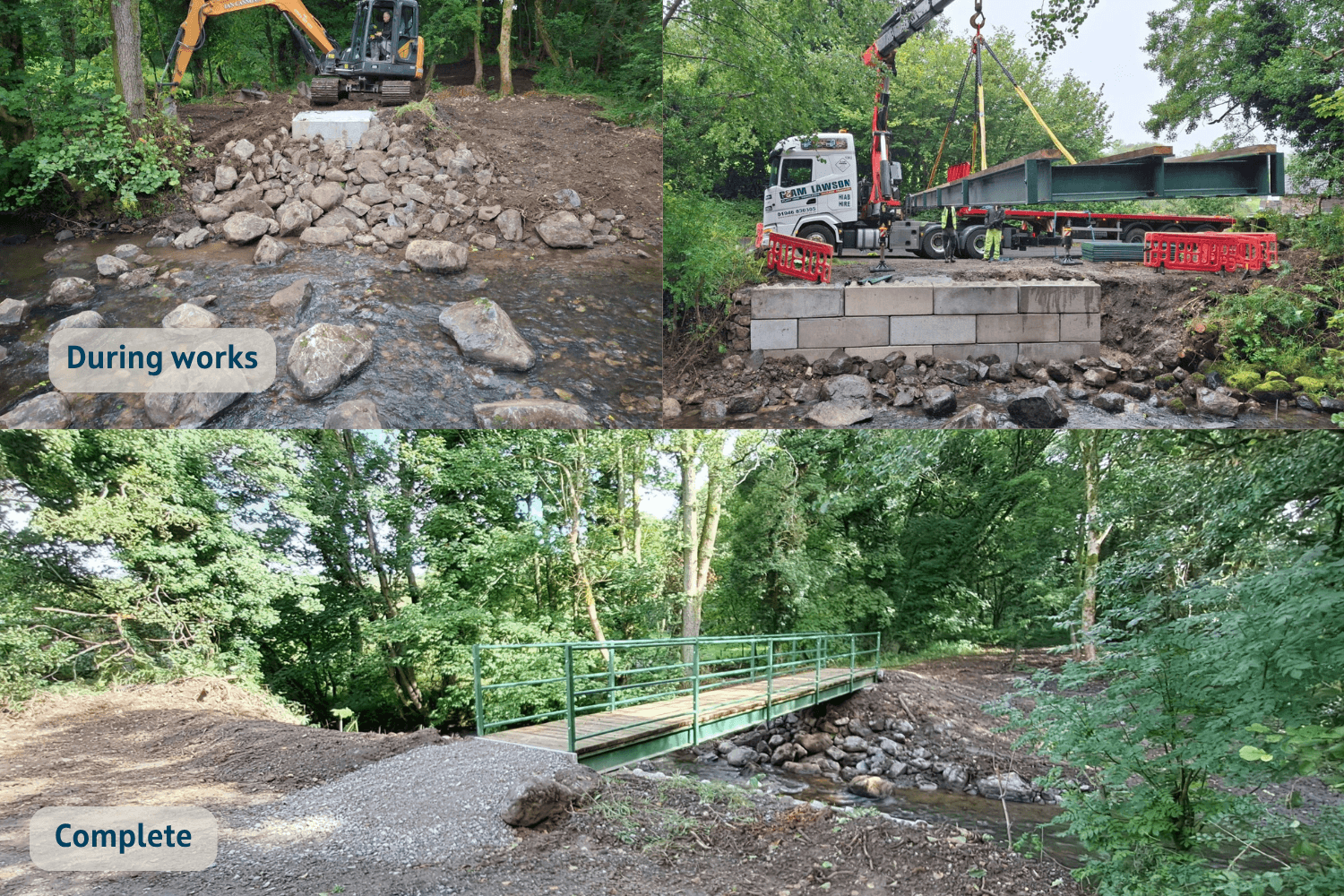
Ireby bridge during and after works
Restoring rivers together
These three sites are a great example of what practical river restoration is all about: matching the technique to the site, making funding stretch as far as possible, and working closely with local partners.
None of this work is possible without the trust and cooperation of local landowners who grant us access to restore these habitats. If you manage land along a West Cumbrian watercourse and would like to explore what's possible on your stretch of river, we’d love to hear from you.
A massive thank you to the Environment Agency, National Trust, Admiral, Dynamic Rivers, contractors Tom Lindsay LTD and Cannon Bros. Ltd., and especially the landowners who welcomed us onto their land to get these projects over the line this summer!
