Resilient Glenderamackin Landscape Recovery
Businesses – Get Involved
Nature-based protection for people, property and wildlife.
The problem
Flooding is a serious problem in Keswick and, with climate change, it’s predicted to get worse. We’re also facing a biodiversity crisis.
Our plan
We want to support our communities to manage flood risk. Nature often has the answers to man-made problems. We are using nature-based solutions to reduce downstream flood risk by delivering a whole host of interventions including re-wiggling rivers, planting trees and restoring wetlands. We will deliver these at an ambitious scale in a multi-million-pound catchment-wide programme to make a big difference to these issues as part of an adaptive pathway, working with other agencies.
To achieve this, we’re looking at using a combination of public and private sector funding to make our vision a reality. This blended finance approach is increasingly being favoured by UK Government for nature restoration projects and through the new Environmental Land Management (ELM) Landscape Recovery scheme. This project is one of the biggest blended finance projects being worked up in England and there is significant national interest. It’s an important pilot and an opportunity to show how working together can really make a difference, not just for flooding, but to address the biodiversity crisis, whilst ensuring we continue to support and work with the local farming community.
The benefits
Reducing flood risk (by a modelled 10% off the flood peak in a 1 in 30 year event in the present day, continuing to offer protection up to 2039 (and beyond) using mid-point climate change projections)
Mitigating climate change
Reversing biodiversity loss
Improving water quality
Supporting our local farming communities
The costs
The capital delivery will cost around £38M; some of this will come from existing Government grants, such as national woodland planting grants. Because of the rural nature of the catchment, a significant proportion of the funding will come from Government sources, such as agri-environment schemes and flood funding. Other potential buyers include National Highways (again a Government source but a different department), the insurance/reinsurance sector (who are interested in this pilot) and United Utilities (private sector). As this project is specifically designed to address local issues, and benefit local businesses and residents, the other larger stakeholders expect us to work with a consortium of local businesses.

Water storage area in the Naddle Valley

Representatives from local business attending a presentation at Cockermouth Castle
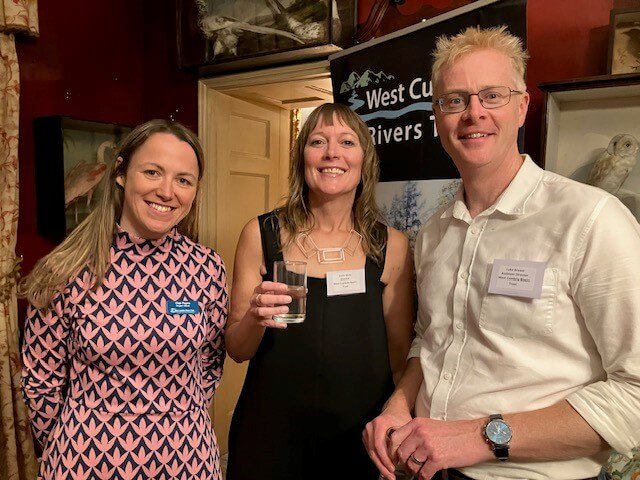
WCRT team at the event at Cockermouth Castle
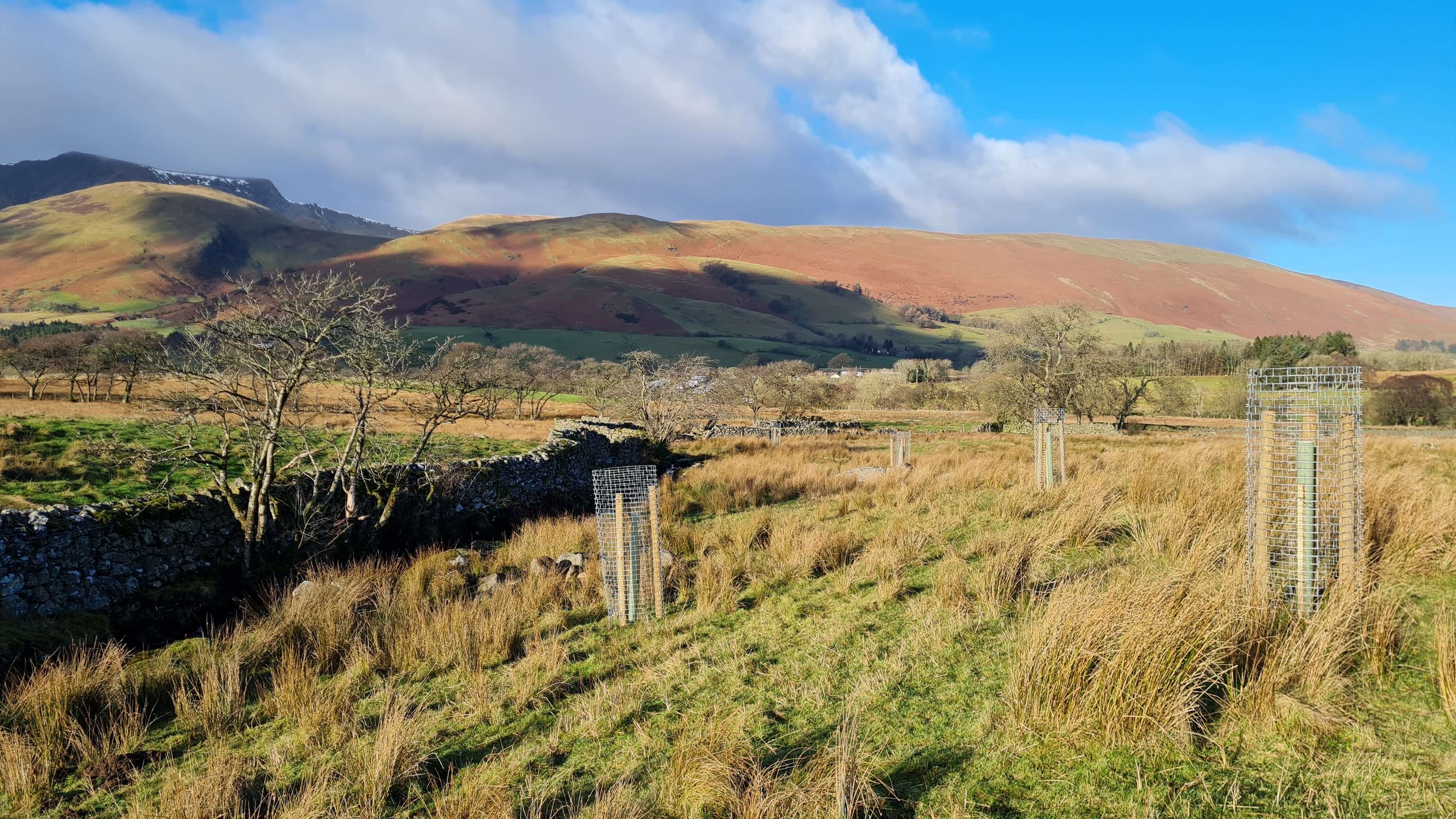
Storms Farm pond, Glenderamackin
How your business can get involved
This project could help local businesses deliver their corporate environment and sustainability and/or social and community strategies, as well as reducing long-term flood risk and future insurance costs for their business and customers.
There are also opportunities through this project for companies to offset their water usage through ‘Replenish’ – a water stewardship metric. It’s important that those who will stand to benefit directly from this project are also supporting it and contributing to its delivery. This is a high profile national pilot and any support would be prominently recognised in project communications.
For more information, view our FAQs below or contact us for an initial chat with the Resilient Glenderamackin project team. Please email info@westcumbriariverstrust.org or call 017687 75429.
Frequently asked questions
-
Further investment in Keswick’s ‘hard’ flood defences does not hit the strict criteria set for national flood risk funding. Unless the funding formula changes, Keswick will not see any further investment in ‘hard’ flood defences anytime soon. At the same time climate change is increasing peak river flows – the north-west is predicted to be one of the areas impacted worst by increased flows, and the flood defences are already operating at a considerably lower standard of protection than that for which they were originally designed. This could impact flood insurance for local businesses as well as increased frequency and levels of flooding. This project is the opportunity for everyone to come together – locally and nationally, to really make a difference, not just for flooding but to address the biodiversity crisis we are in, whilst supporting the local farming community.
-
We are looking into how Biodiversity Net Gain and/or Carbon Credits could work with or alongside this project. They cannot be ‘stacked’ with other benefits and are effectively ‘owned’ directly by the landowner. It is likely that we won’t be able to offer BNG units or Carbon credits in return for a contribution towards this project. We await further government guidance to inform our thinking on this.
-
At the moment we are looking to raise the profile of this project amongst local businesses and residents with a view to having more detailed conversations about how you could get involved.
The project has a detailed business plan. The project will only go ahead if we get all of the required funding together from buyers and investors, as well as sufficient landowner commitments. Therefore, any commitments from local businesses will only be drawn upon when required. However, we will likely draw up a Memorandum of Understanding to confirm interest and demonstrate commitment to any potential investors.
-
The project team are seeking a commitment from local businesses towards the capital delivery costs of the Natural Flood Management (NFM) interventions. Most of the finance for the project’s NFM delivery costs, estimated as £10-12 million, is expected to come from the UK Government’s Landscape Recovery Programme, but to secure this public funding, we need to demonstrate financial support from the private sector. The project has set a target for a combined contribution of around £150,000 from local businesses towards the NFM benefits this project will deliver, in addition to a combined £100,000 contribution towards the wider environmental and societal benefits provided by the project. At present, the project is seeking a commitment from businesses to make a future financial contribution which it can use as evidence to present to DEFRA that private sector support exists, which should help the value for money case this project is able to make to the UK Government in March 2025. The project would only request the funding pledged at the point it is ready to commence implementation.
-
The project will be delivered through a Community Interest Company limited by guarantee (i.e. it has no share capital or ownership). The CIC will have a board of directors representing all stakeholders e.g. landowners, local community, Rivers Trust, local business, local authority etc and profits will be reinvested into its long term objectives which is to ensure catchment resilience. We are basing this model on an earlier successful pilot developed by the Rivers Trust movement – the Wyre NFM project in the Forest of Bowland, North Lancashire. We have a good deal of momentum now with the project having engaged farmers and landowners, undertaken hydrological modelling, business planning, financial modelling and interest from some of the larger buyers. This is a Defra funded pilot with a high profile, so we have government support as well. A meaningful local business contribution is an important signal of support and commitment however – so it’s important we can show other stakeholders that those who stand to benefit directly are also contributing.
-
We have done some detailed business and financial modelling for this 20-year project and have created both a "base case" version - which is what we would be confident of delivering as a minimum and also an "ambition case" version which is what we'll really be aiming for in the catchment over the next 10 - 20 years. We recognise that NFM and environmental recovery won't happen overnight as farmers, landowners and commoners will move at different paces but we think for this event we should be talking about our highest level of ambition i.e. the "ambition case" and this would result in an (uninflated) £65m investment in the catchment over 20 years of which c£30m is capital interventions (river restoration, bunds and wetlands, hedgerows, tree planting, bunds etc) and c£30m is direct agri-payments to farmers under the Landscape Recovery scheme. The remaining £5m is the cost of managing the community interest company, which is the vehicle we are using to deliver this project. So, the total investment is c£65m of which we are aiming for up to £3m to come from the private sector. We are hopeful that the vast majority of this £3m will come from major organisations such as United Utilities and National Highways with a c£250,000 contribution from local businesses. This means that Defra will be funding c£62m of the £65m (although some of this could come through third sector grants from the likes of The Woodland Trust if we can secure a better deal than through EWCO).