
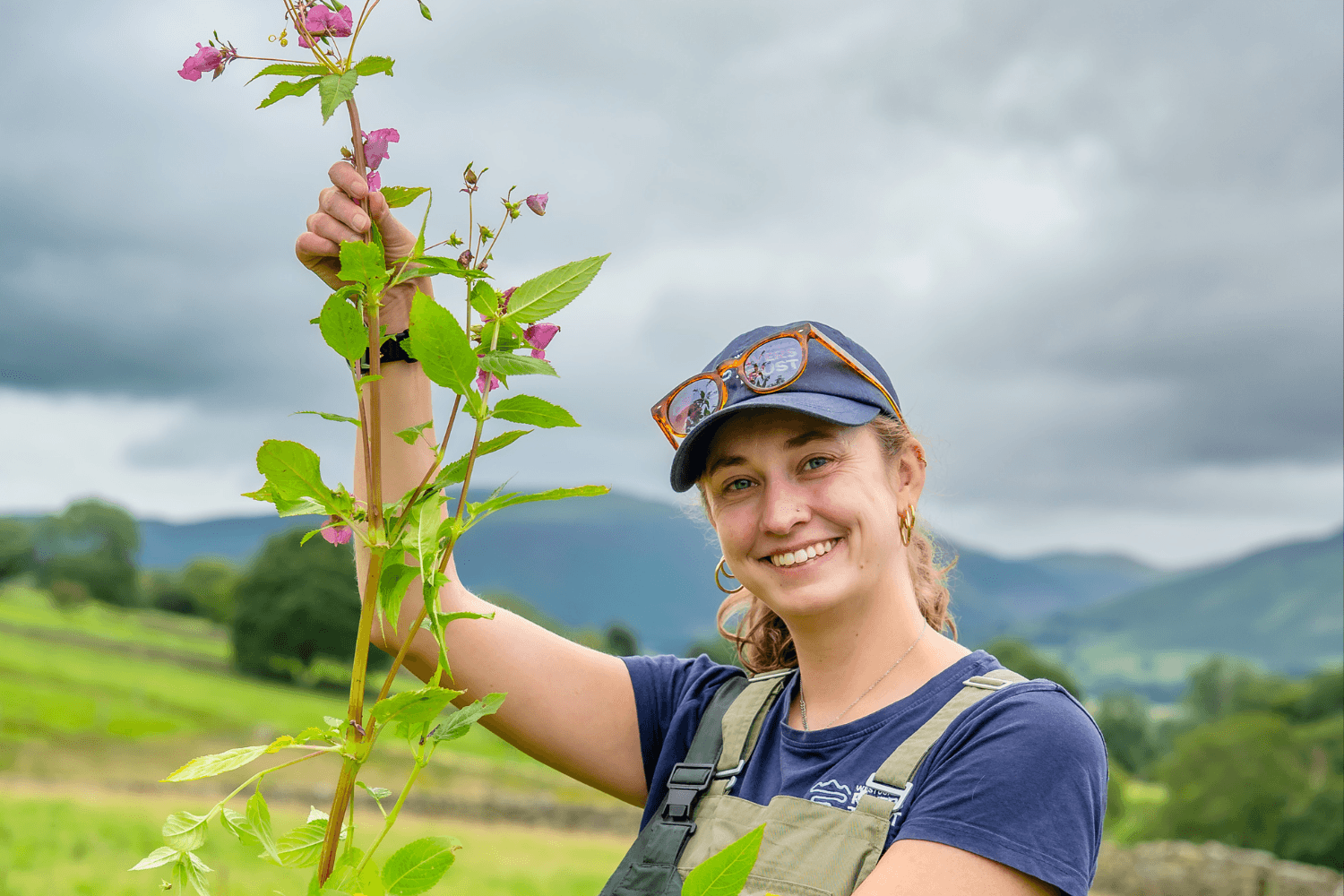
WCRT INNS Officer Izzie Mullin pulling Himalayan Balsam
West Cumbria Rivers Trust (WCRT) is celebrating a monumental summer of environmental action, as local volunteers and community groups logged an extraordinary 2,300 hours tackling invasive Himalayan balsam. Supported by funding from the National Lottery Community Fund, WCRT’s initiative to co-ordinate and register local groups has united communities across the region to protect local rivers, biodiversity, and water quality.
Himalayan balsam (Impatiens glandulifera) is one of the UK’s most damaging invasive non-native plant species. Rapidly spreading along riverbanks, it smothers native flora, reduces biodiversity, and leaves riverbanks bare and vulnerable to severe erosion during winter months. This erosion washes excessive sediment into rivers, degrading water quality and destroying vital spawning habitat for fish and aquatic wildlife.
Earlier this year, WCRT launched an outreach campaign to connect with community groups across West Cumbria, offering guidance, training, and a Balsam Bashing Toolkit for groups to set up on their own. All the volunteers’ fantastic efforts have been logged and the response has been unprecedented:
Over 2,300 hours spent balsam bashing by volunteers across WCRT sessions, community groups, and independent 'guerilla' efforts - equivalent to more than a full year’s worth of working days packed into a single summer.
An average of 5 balsam bashes per week taking place throughout the summer across the catchment.
2.9 million individual plants tackled, preventing an estimated 750 million seeds from dispersing and spreading further into local waterways.
Dedicated sub-catchment groups leading the charge on the River Derwent and beyond, including the Greta Balsam Bashers, the Melbreak Communities Balsam Busters, and the Marron Balsam Bashers.
This year's efforts were further bolstered by an innovative collaboration with Cockermouth’s historic Jennings Brewery. Jennings provided funding and co-hosted drop-in balsam bashing sessions along the River Cocker, highlighting the clear link between clean river water and great local beer. The partnership helped raise the profile of the invasive species to new audiences, culminating in WCRT’s largest ever balsam bashing event with 43 volunteers rolling up their sleeves to protect the river.
Izzie Mullin, WCRT’s INNS Officer, said:
"The dedication shown by our community this summer has been nothing short of extraordinary. Himalayan balsam poses a severe threat to our local ecosystems, choking out native wildlife and damaging the health of our rivers. Seeing so many volunteers, from established community groups to absolute beginners, come together to protect West Cumbria's rivers gives us real hope. We are immensely grateful to the National Lottery Community Fund and Jennings Brewery for making this work possible."
“By working systematically from the top of our sub-catchments downward, we can stop the re-seeding cycle and restore native species to our riverbanks for good.”
Paul Christmas, Melbreak Communities Balsam Bashing Group member, said:
“It's been really good being part of the Melbreak Communities balsam bashing group this summer. We've had a good size group each week and that's made the task feel more achievable and more fun too. We've visited the same fields several times, and on each visit new plants had popped up from areas we'd previously cleared. But consistency has been key and we can now really see the difference. Over the summer we've cleared something like 880,000 plants, avoiding the spread of something like a quarter of a billion seeds!”
Get Involved
While this summer’s results mark a major victory for West Cumbria’s rivers, the fight against Himalayan balsam is an ongoing effort. Because balsam seeds can remain viable in the soil for several seasons, areas often need to be tackled for several consecutive years to see a lasting impact and prevent regrowth.
WCRT is calling on anyone inspired by this summer's success to join in. Whether you want to join an existing session, start a group in your local patch, or register an established team, WCRT is ready to support you with equipment, guidance, and coordination.
To register your group, find upcoming volunteer events, or learn more about protecting local rivers, visit: westcumbriariverstrust.org/projects/local-balsam-groups