
Cumbrian farms install rainwater harvesting systems as dry weather highlights need for water resilience
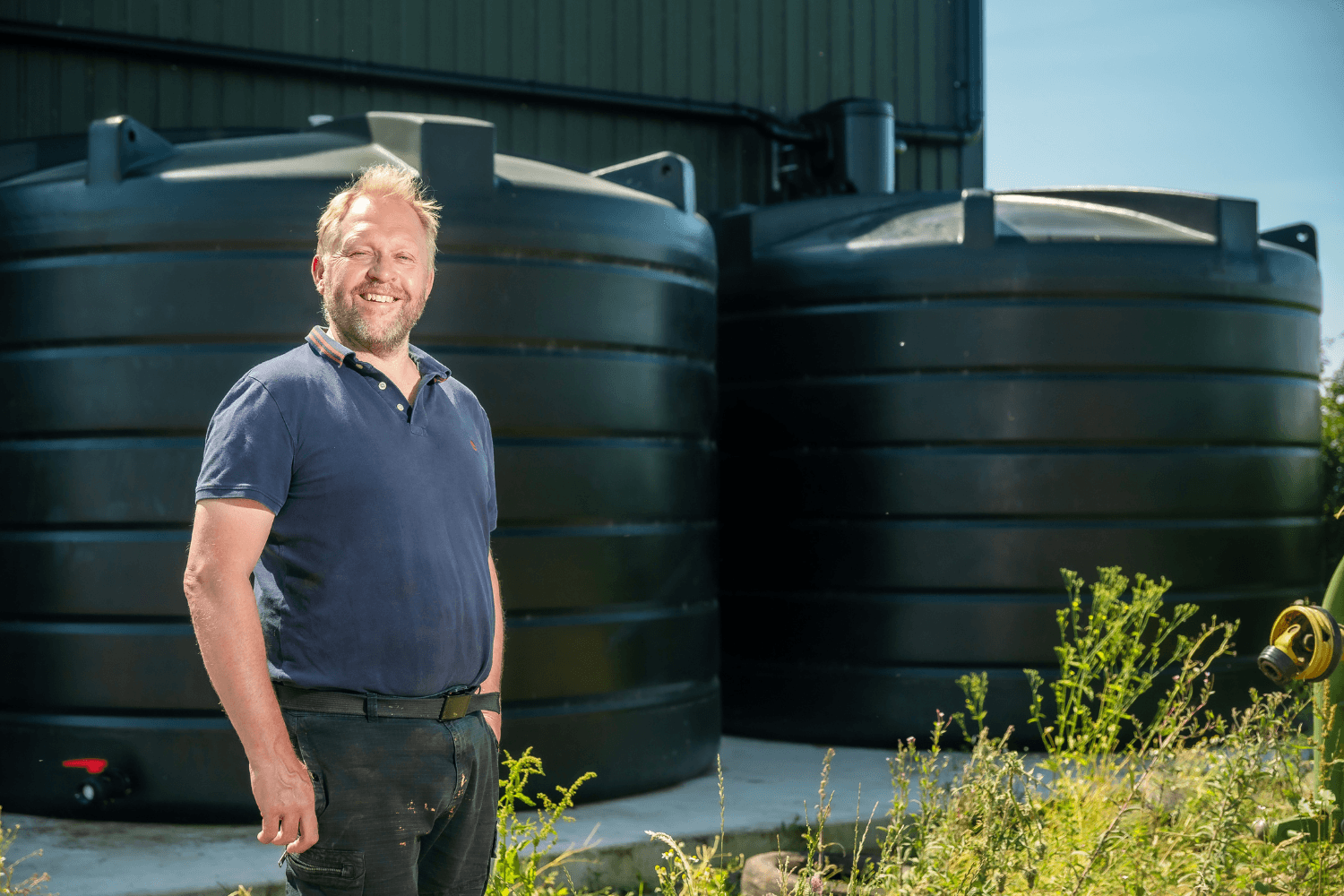
A farmer in the Waver Wampool catchment beside a rainwater harvesting system that captures and stores rainfall. West Cumbria Rivers Trust is working with farms across the catchment on a co-ordinated programme to improve water resilience, support farm businesses and help communities adapt to increasingly extreme weather.
Farmers across the Waver Wampool catchment in North Cumbria are participating in a co-ordinated rainwater harvesting programme designed to improve water quality, strengthen farm resilience, and help communities adapt to increasingly extreme weather patterns - as recent drought conditions highlight the growing need for resilient water supplies on farms.
The Waver Wampool Farming Futures project is being delivered by West Cumbria Rivers Trust’s (WCRT) Project Officer Tasha Pearson, with funding from the Waste & Resources Action Programme (WRAP) and support from delivery partners including the Environment Agency (EA), Farming in Protected Landscapes (FiPL) and Dunbia.
The project is working with nine farms across the catchment, supporting the adoption of practical, nature-based measures that improve environmental outcomes while helping farm businesses cope with increasingly extreme weather.
A central element of the programme is the installation of rainwater harvesting systems, supported by £107,000 from WRAP’s Nature-Based Solutions Fund, the first year of this funding stream. These systems capture and store rainwater from farm buildings and store it for later use, reducing reliance on mains or abstracted water during dry spells and helping to manage heavy rainfall when it occurs.
Alongside environmental benefits, the systems provide clear practical advantages for participating farms, including improved water security, reduced reliance on external water supplies, improved livestock welfare, and increased operational efficiency. These measures help futureproof farm businesses in the face of both climate and economic pressures.
The project is being delivered against a backdrop of a changing climate. The UK is already experiencing both heavier downpours and longer dry periods. According to the Met Office UK Climate Projections, the UK is expected to experience wetter winters and more intense rainfall events, while summer drought risk is projected to increase leaving farms short of water when it’s needed most. Initiatives such as this help to capture and store rain when it falls, supporting both on-farm water supply and helping to reduce downstream flood risk in extreme conditions.
Learning from the project is already being shared more widely. The Agricultural and Horticultural Development Board (AHDB) is featuring the work as a series of case studies in its podcast series, with two episodes now available as part of its AG Show coverage.
While similar approaches to rainwater harvesting have been implemented elsewhere on individual farms, this programme brings together multiple holdings across a single catchment in a coordinated approach, combining practical delivery with shared learning and wider resilience benefits.
Tasha Pearson said: “Recent dry weather has shown how important secure water supplies are for farming businesses. This project demonstrates the value of collaboration between farmers, environmental organisations and industry partners in delivering practical solutions that support more resilient farming systems while also benefiting the environment in a changing climate.”