
New 40-hectare Shoulthwaite woodland will help wildlife, cool streams, and improve landscapes
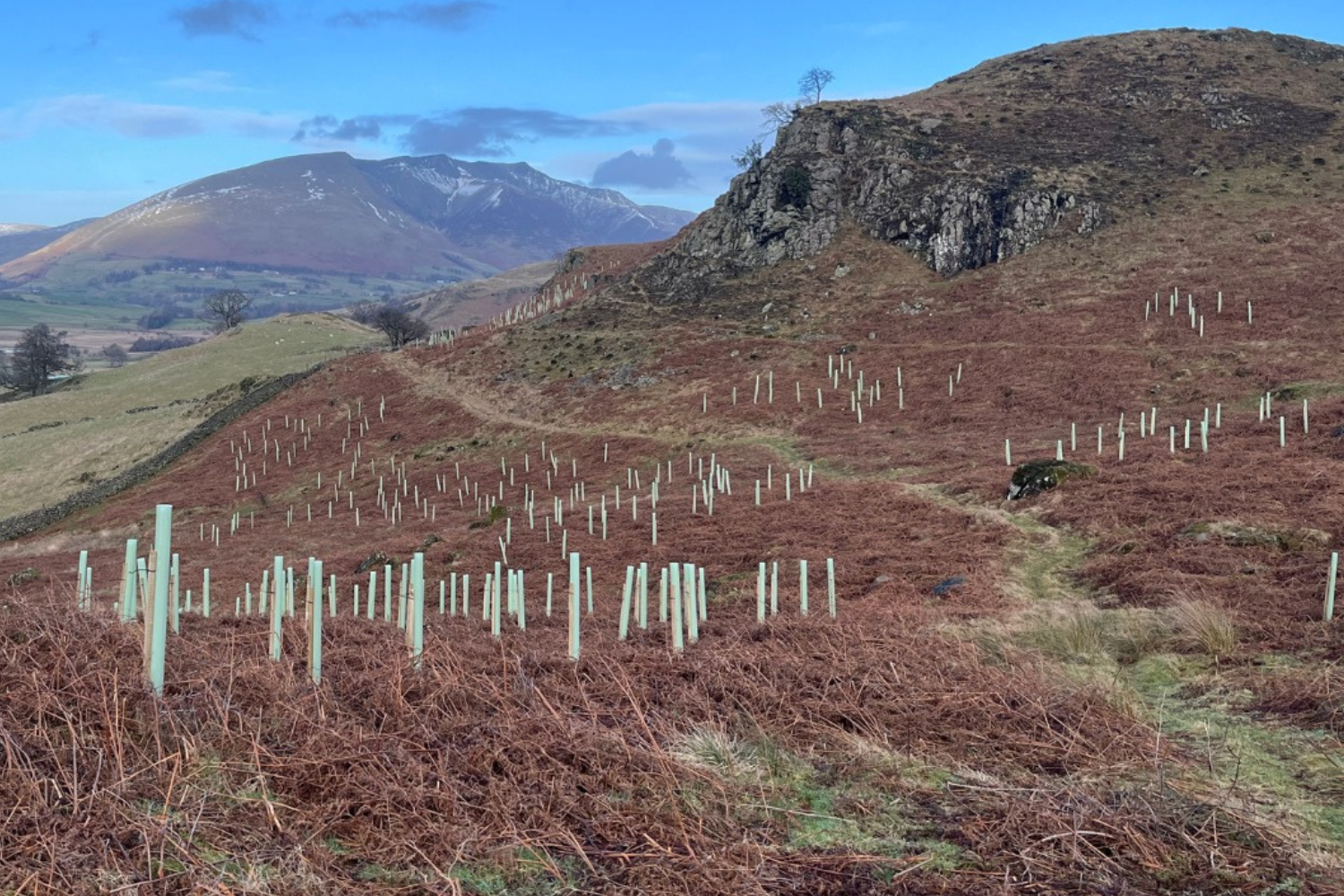
A new 40-hectare woodland at Shoulthwaite, between Keswick and Thirlmere, is now taking shape, with thousands of young trees already planted as part of a project to restore nature, improve water quality and improve the local landscape.
The woodland, newly named Scott Howe Wood, will provide shade and help cool the small becks running through the site, helping aquatic life and reducing water temperature stress, while creating a more resilient habitat for wildlife and a greener, more climate-ready landscape for the future.
The site, which is low fell and largely dominated by bracken, has historically offered limited value for grazing. However, these conditions make it an ideal candidate for woodland restoration and expansion, helping to create a more resilient landscape for wildlife, climate, and people.
In total, 55,000 trees have now been planted across the site as part of this woodland creation project led by West Cumbria Rivers Trust, with planting delivered on the ground by the skilled team at Hay Fell Ltd. Working across challenging terrain with spectacular views over the surrounding fells, the team has made huge progress in bringing the Shoulthwaite woodland vision to life.
The woodland is being created using a mix of approaches to give the trees the best possible chance of establishing in a bracken-heavy environment. Around one fifth of the trees have been planted in protective tubes, prioritising species most vulnerable to browsing by deer.
The remaining trees have been planted without guards using dense cluster planting, an innovative technique being trialled to help young trees survive by protecting one another. This approach creates a ring of thorny shrubs surrounding a cluster of canopy trees, which acts as a natural barrier against browsing mammals. As the clusters grow, they will also provide shade that suppresses bracken growth. Species planted include hawthorn and hazel shrubs, alongside canopy trees such as oak and alder.
The lower area of the site has been left to regenerate naturally, allowing existing trees and seed sources to shape the developing woodland.
A deer-height wall and fencing are in place, with deer control actively managed, and a long-term maintenance plan established to support the woodland as it grows.
Importantly, a public footpath runs through the woodland, allowing local residents and visitors to walk through the site and see the transformation taking place.
This woodland creation project has been funded through Forestry England’s Woodland Creation Offer, with advice and support provided by The Woodland Trust.
As the woodland establishes, it will play an important role in supporting nature recovery, strengthening habitats, improving water quality, and contributing to climate change mitigation. Over time, the growing trees will help store carbon, improve soil health, create shade for small streams, and contribute to a more resilient landscape better able to cope with heavier rainfall and changing weather patterns.