
It’s been a busy summer over in St John’s in the Vale for our team. We’ve been knee-deep in water across the catchment, tackling everything from blocked fish migration routes to restoring stretches of river that were crying out for more natural habitat - and we’re pretty proud of what’s been achieved in just a few months.
Read on to find out what we’ve been up to this summer.
Unlocking the upper How Beck for migrating salmon and trout
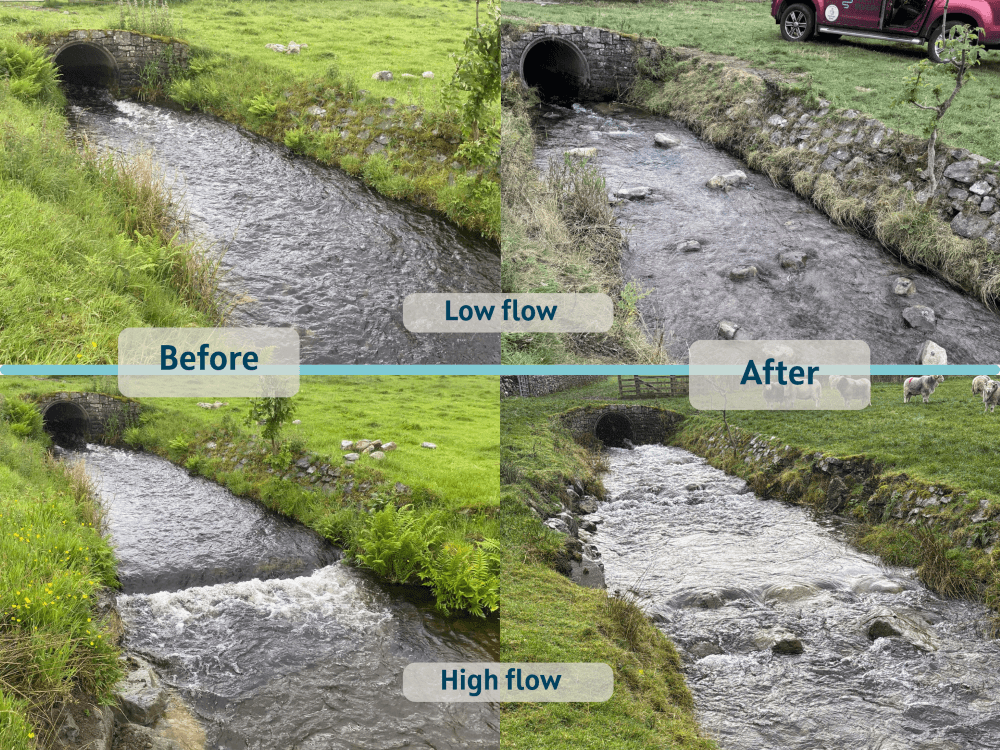
Before / after at How Beck
If you know the road past The King’s Head Inn at Thirlspot, you’ve probably driven or walked past How Beck without giving much thought to what lies beneath. Under the road, a culvert with a smooth, flat concrete floor was creating a major obstacle for migratory fish. Water raced over it in a single, shallow flow, making it extremely difficult for fish to swim upstream. What might seem like an ordinary road crossing was, in reality, a dead end for Atlantic salmon and sea trout trying to reach valuable spawning habitat.
To tackle the problem, we secured cobbles and boulders to the culvert’s concrete surface. These rocks create pockets of deep, slower flowing water, giving fish vital places to rest before continuing their journey upstream.
Making sure migratory fish can reach the headwaters of How Beck was a top priority given that recent electrofishing surveys recorded a big increase in brown trout numbers (non-migratory) following previous habitat improvements upstream.
River restoration at Bridge House
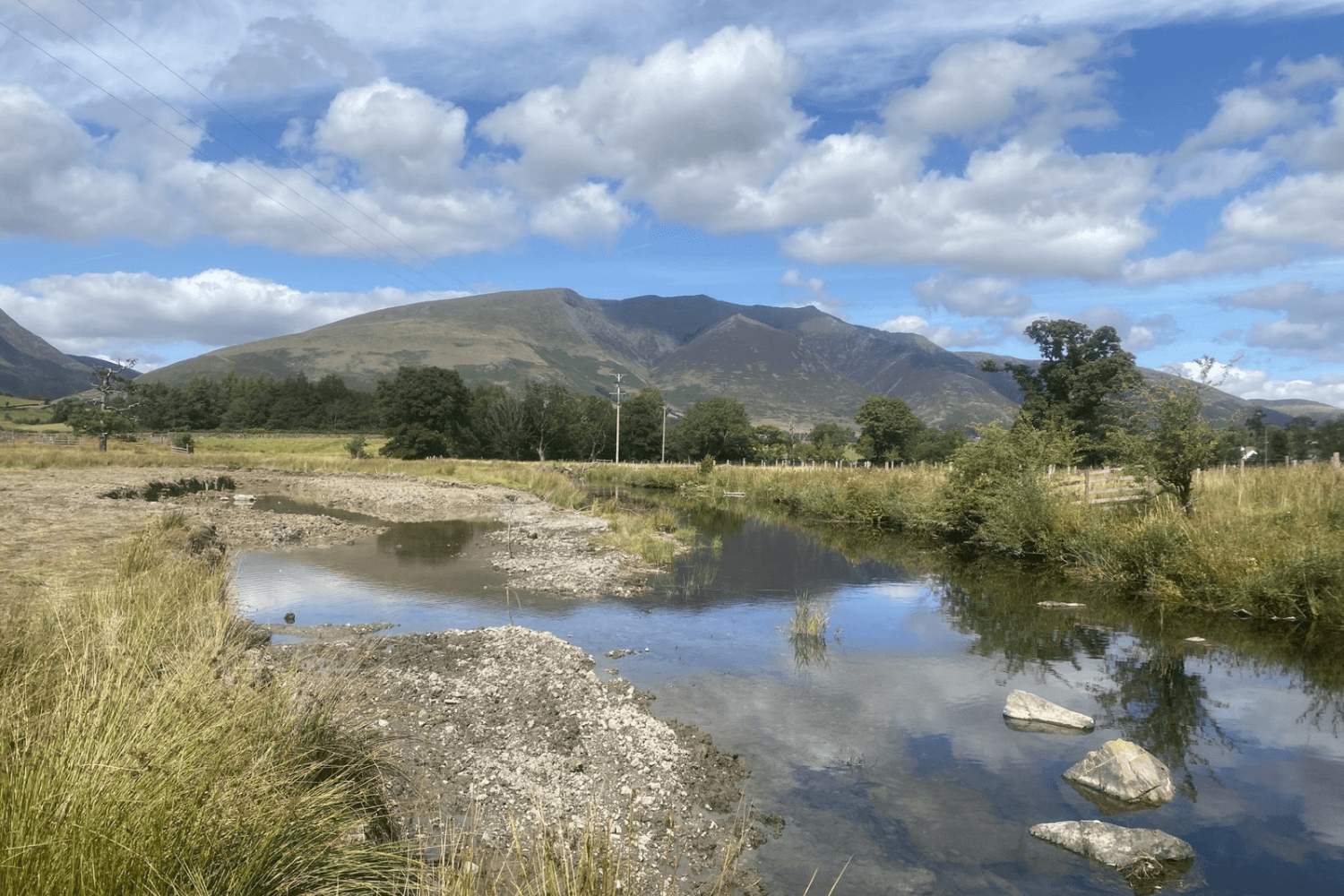
Restoration work at Bridge House
Over at Bridge House, we’ve been giving St John’s Beck more space to move. Over the years, artificial banks and stone walls have squeezed the river into a narrow channel, cutting it off from the surrounding landscape and stopping it from behaving naturally.
We’ve taken out these man-made barriers and lowered the riverbanks so the river can reconnect with its floodplain. When water levels rise, the river now has room to spread out and slow down, rather than being trapped in a narrow, rushing chute.
The work hasn’t stopped there; we’ve also given smaller streams a helping hand, bringing water back into some of the farm’s soggy, hard to farm patches. By letting these areas get wet again, we’re creating a mixture of permanent and seasonal wetland habitats that give birds, insects and amphibians a brilliant place to feed, breed and shelter.
Together, these improvements will help slow the flow of water and allow the river and streams to work more naturally with the landscape, rather than against it.
Creating better spawning grounds and nurseries for fish at High Bridge End and Legburthwaite
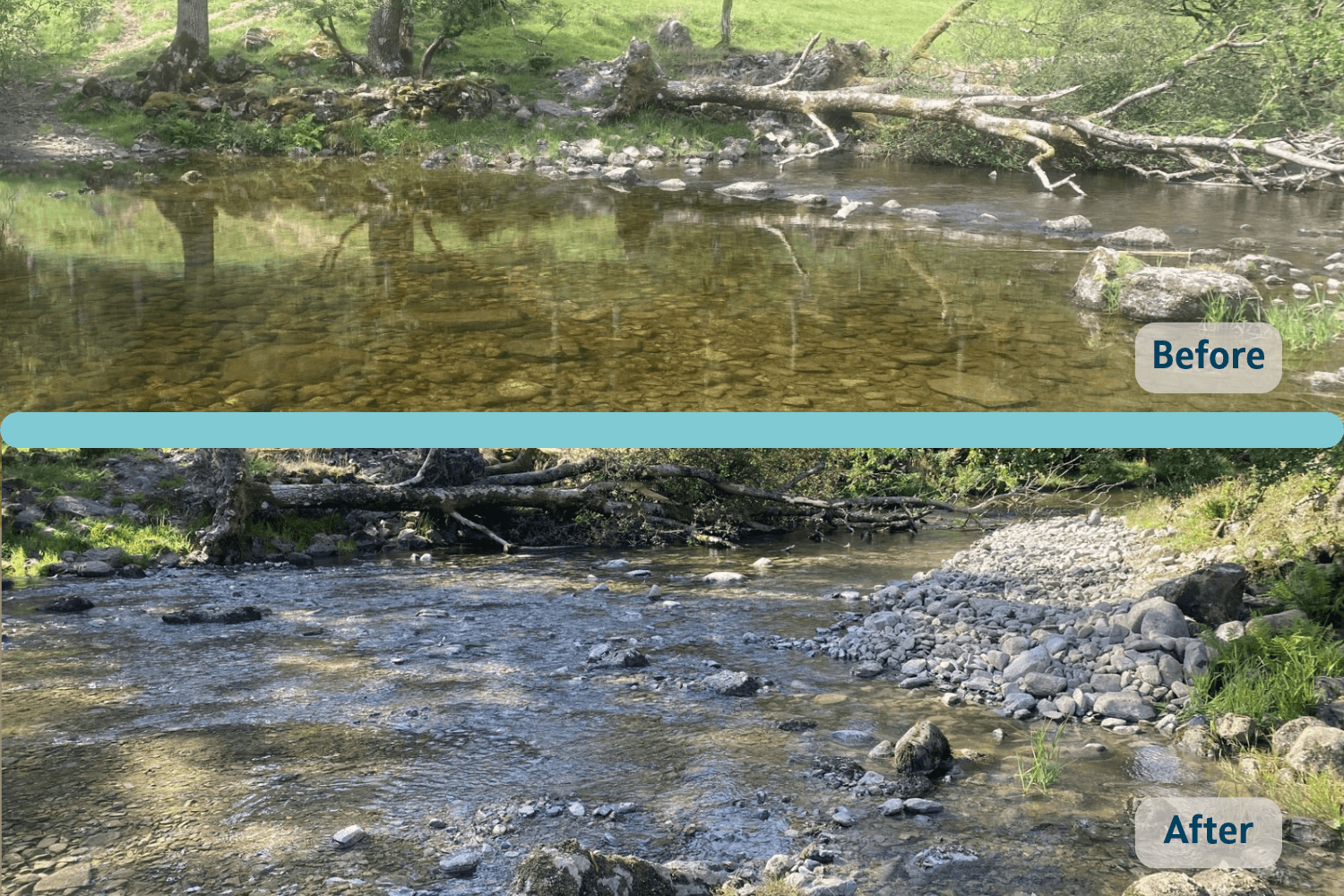
Before/after at High Bridge End
To round off the summer, we turned our attention to the upper St John’s Beck. St John’s Beck flows from Thirlmere Reservoir, a vital source of water for the North West. While the reservoir plays a crucial role in water supply, it also stops natural river materials – like gravels, cobbles and boulders - from moving downstream. To help fix this, we carefully reintroduced gravel and other sediment into the river at High Bridge End. As winter water levels rise, the sediment will naturally shift and reshape the riverbed, creating a rich variety of habitats. Over time, this provides better spawning grounds for fish and safe, sheltered spots for young fish to grow. We’ll be back walking the riverbank this November for our annual redd surveys, searching for the gravel nests where fish lay their eggs. We can’t wait to see if the fish will be making use of the new habitat.
Slightly further downstream at Legburthwaite, we’ve added clusters of boulders to bring more life and variety to the river. These create a natural mix of shallow, fast-flowing water and deeper, slower pools, giving fish and invertebrates a wide range of places to feed, shelter and thrive.
Together, these improvements help restore natural river processes, create diverse habitats and support a healthier river system for years to come.
All our river restoration work is carefully planned and modelled using the latest hydrological techniques to understand how changes may affect the river, surrounding areas and ensure the best outcomes for both people and nature in the communities where we work. We work hard to deliver value for money on every restoration effort so that, step by step, we’re transforming our local rivers into healthy, self-sustaining and resilient systems for the future.
These improvements wouldn’t be possible without the fantastic support and collaboration of everyone involved. A huge thank you to our landowners for their trust in us and confidence in the project, to our skilled contractors for bringing the work to life, and to our project partners at United Utilities, the Environment Agency and Natural England for their continued support.
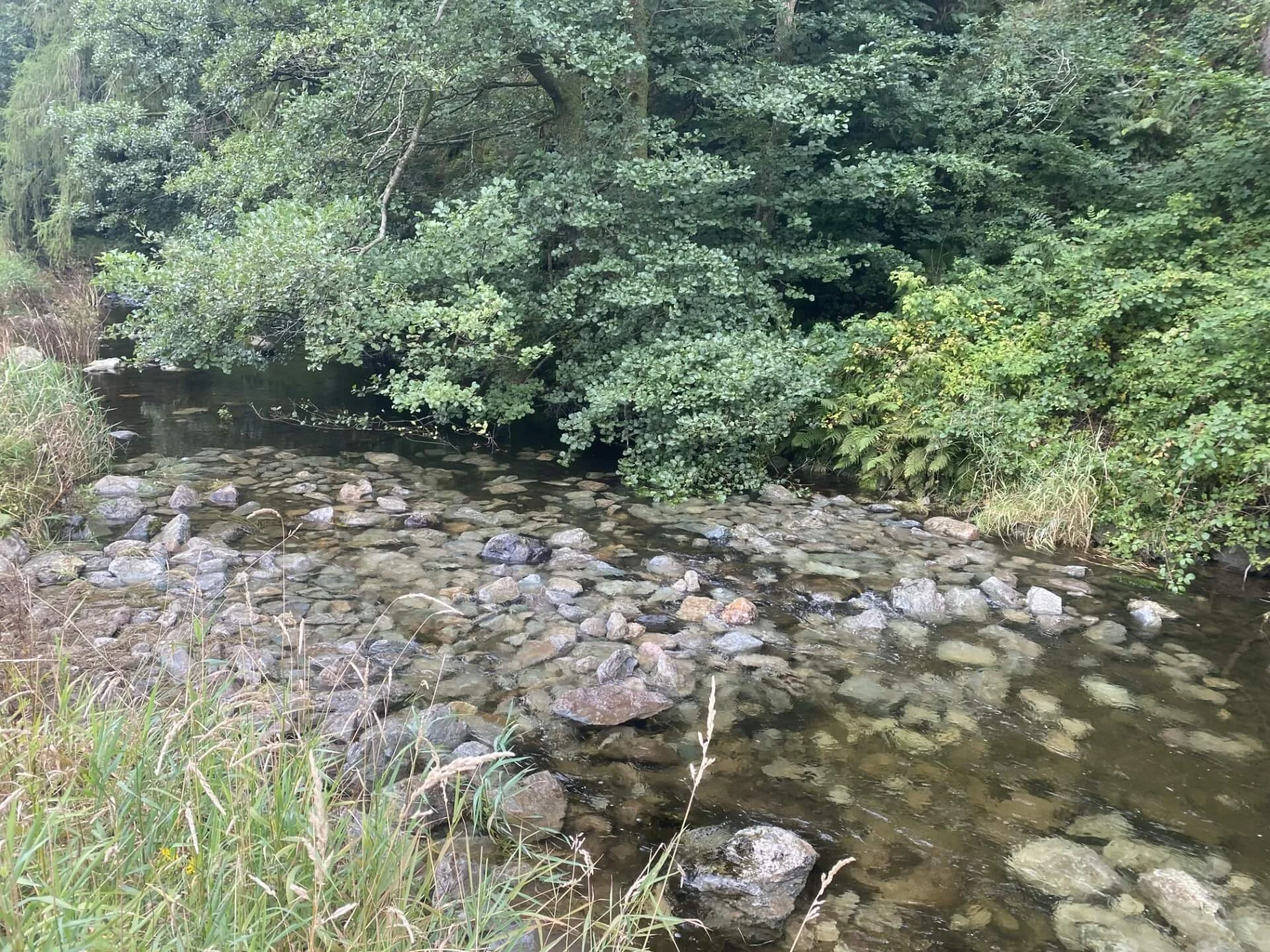
New boulder feature at Legburthwaite